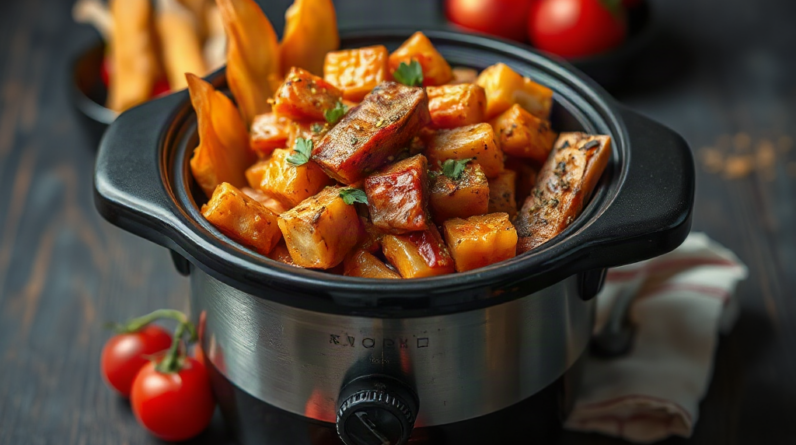
Crockpot recipes can make convenient weight management easier by combining lean protein, fiber-rich vegetables, legumes, and measured portions in a meal prepared with little active cooking. Choose broth- or tomato-based dishes more often than recipes built around cream, cheese, fatty meat, or sugary sauces. Add delicate vegetables and dairy near the end, and use enough liquid for safe, even cooking without turning the meal watery. Portion the finished dish before serving, then refrigerate or freeze extras promptly.
What Makes a Crockpot Meal Weight-Management Friendly?
A useful slow-cooker meal provides a satisfying combination of protein, fiber, vegetables, and flavor without relying on large amounts of energy-dense additions. The cooking method offers convenience, but the ingredient balance determines how well the dish fits a weight-management routine. A crockpot filled with cream cheese, sausage, and condensed soup has a very different nutritional profile from one containing chicken, beans, tomatoes, peppers, and broth.
Protein and fiber deserve priority because they can make a portion more satisfying. Practical protein choices include skinless chicken, turkey, lean beef, lentils, beans, and split peas. Fiber comes from legumes, vegetables, barley, and other intact grains. Combining both in one pot also makes it less likely that dinner will consist mainly of noodles, rice, or sauce. A turkey-and-bean chili, for example, supplies more varied texture and substance than a bowl dominated by refined pasta.
Liquid ingredients can quietly change the meal. Broth, crushed tomatoes, salsa, and water add moisture with less richness than heavy cream or large quantities of coconut milk. This does not mean creamy recipes are forbidden. A smaller amount of a flavorful ingredient may be enough: stir in plain Greek yogurt after cooking, finish a soup with a measured splash of milk, or serve grated cheese as an optional topping rather than melting an unrestricted amount into the entire pot.
Vegetable volume is helpful only when the vegetables remain enjoyable to eat. Durable options such as carrots, cabbage, mushrooms, onions, celery, and winter squash tolerate longer cooking. Spinach, peas, zucchini, and fresh herbs are usually better added late so they retain color and texture. Loading every vegetable into the cooker at the beginning often produces a uniform, overly soft result that makes planned leftovers less appealing.
Watch for the assumption that homemade automatically means appropriate for every goal. Oil poured freely into the insert, sweet bottled sauces, oversized servings, and frequent high-calorie toppings can turn an otherwise balanced dish into a much heavier meal. A better test is practical: does one planned portion contain a clear protein source, at least one substantial vegetable, a reasonable amount of starch, and enough flavor to be satisfying without numerous add-ons?
How Do You Build a Balanced Crockpot Recipe?
A dependable crockpot recipe begins with a protein-and-produce structure, followed by enough cooking liquid, seasoning, and an optional measured starch. This order prevents the common mistake of choosing a rich sauce first and treating vegetables as an afterthought. It also creates a flexible template that can accommodate different budgets, dietary preferences, and serving sizes.
Start with one principal protein. For a meat-based dish, trim visible fat and choose pieces suited to moist cooking, such as chicken thighs, chicken breasts, lean stew beef, or turkey. Chicken thighs generally remain moist more easily, while breasts can become dry if cooked too long. For a plant-based pot, lentils and canned beans are convenient. Dried kidney beans require special care and should not be placed raw in a slow cooker; use properly cooked canned kidney beans or boil dried beans according to established food-safety instructions before slow cooking.
Next, add two or more vegetables with compatible cooking times. Onions, carrots, celery, mushrooms, tomatoes, and peppers work in soups, stews, and chili. Cut dense vegetables into similar-size pieces so they soften at roughly the same rate. Place firmer root vegetables closer to the heat source and reserve quick-cooking ingredients for the last portion of cooking.
Use liquid deliberately rather than automatically covering everything. Slow cookers lose less moisture than uncovered pots, and vegetables and meat release liquid as they cook. Soups need more broth, but shredded chicken or a thick curry may need only enough to prevent scorching and distribute seasoning. If the final dish is thin, remove the lid briefly only if the appliance instructions permit, stir in a suitable thickener, or serve it over a modest amount of grain rather than adding heavy cream to disguise the texture.
A compact assembly sequence keeps the recipe balanced:
- Choose the anchor: lean meat, poultry, lentils, or beans.
- Build vegetable volume: combine sturdy vegetables with one late addition.
- Select the liquid: broth, tomatoes, salsa, or a measured creamy ingredient.
- Season in layers: use garlic, spices, herbs, citrus, vinegar, or chiles.
- Decide on starch: include barley or potatoes, or portion rice separately.
Seasoning may need adjustment at the end because long cooking can mute fresh flavors. Acidity from lemon juice or vinegar, fresh herbs, or a small amount of a strongly flavored garnish can brighten the whole pot. Adding salt repeatedly during cooking is less useful than tasting once the ingredients have softened and the liquid has concentrated. The goal is not a bland “diet” meal; it is a flavorful meal whose richness and serving size remain visible and controllable.
Four Flexible Crockpot Meal Formulas
Flexible meal formulas are more practical than rigid recipes when grocery availability, household preferences, and schedules change. Each formula below has a clear protein source, vegetables, and a defined role for starch or toppings. Exact cooking time depends on the appliance, ingredient temperature, quantity, and cut size, so follow the cooker manual and verify meat with a food thermometer rather than relying only on appearance.
Tomato Chicken and White Bean Stew
Combine skinless chicken, no-salt-added or lower-sodium tomatoes, cooked white beans, onion, carrots, garlic, broth, and Italian-style herbs. Shred the chicken when cooked, then add spinach near the end. Beans thicken the liquid slightly and extend the meat, making this useful when budget and portion yield matter. If sodium is a concern, compare labels on broth, tomatoes, and canned beans, and rinse beans when appropriate. Finish with parsley or lemon instead of treating bread and cheese as automatic extras.
Turkey, Bean, and Pepper Chili
Use browned lean ground turkey, cooked beans, crushed tomatoes, onions, bell peppers, cumin, paprika, and chile powder. Browning the turkey first improves texture and allows excess fat to be drained; placing raw ground meat directly into a crowded cooker can create clumps and uneven results. Serve the chili in measured bowls with a spoonful of plain yogurt, chopped scallions, or avocado. Chips, sour cream, and abundant cheese can contribute more energy than the chili itself, so offer toppings separately.
Lentil and Vegetable Curry
Pair lentils with tomatoes, cauliflower, carrots, onion, ginger, garlic, and curry spices. Use broth for most of the liquid and add a measured amount of coconut milk for richness if desired. Full-fat coconut milk produces a silkier result but is more energy-dense than broth; neither choice is inherently wrong, but the amount should match the rest of the meal. Stir in peas or spinach late and portion rice independently, which keeps the grain from absorbing all the sauce during storage.
Good Health Solution is Easier Than Most People Think! Take a Look for Yourself!
Beef, Mushroom, and Barley Soup
Lean stew beef, mushrooms, barley, carrots, celery, onion, and broth create a substantial cold-weather option. Barley absorbs liquid, so this formula needs more broth than a chili and may thicken overnight. Beef adds deeper flavor but may carry more saturated fat than poultry or legumes depending on the cut. Trimming visible fat and using mushrooms to expand the savory base can produce a satisfying soup without making meat the largest component.
Signs that a formula is working include distinct ingredients, a portion that remains satisfying for the intended meal, and leftovers that reheat without becoming greasy or mushy. Warning signs include a layer of fat on top, vegetables disintegrating, meat becoming stringy, or the need for large quantities of toppings to make the dish palatable. Adjust one variable next time—cut size, cooking duration, liquid, or finishing seasoning—rather than changing the entire formula at once.
How Should You Portion, Store, and Reheat Crockpot Meals?
Portioning the finished meal before everyone serves themselves is the simplest way to turn a large batch into a predictable convenience tool. A crockpot may hold several meals, but the appliance’s capacity is not a serving recommendation. Divide the food according to household needs, placing likely lunch portions in individual containers and freezing what will not be used soon.
A visual check can help when exact tracking is not desired. Give vegetables a prominent share of the bowl, retain a clear portion of protein, and treat grains, bread, cheese, avocado, and creamy garnishes as purposeful additions rather than background ingredients. Soup presents a special challenge because broth increases volume without always providing staying power. A vegetable soup with little protein may leave someone hungry quickly; adding beans, lentils, chicken, or turkey usually creates a more complete meal.
Weight management does not require every serving to be identical. A person with higher energy needs, a physically demanding day, or a larger appetite may need more food than someone with lower needs. The useful comparison is not one person’s bowl against another’s. It is whether the portion supports comfortable fullness, fits the wider day of eating, and reduces unplanned grazing later. Persistent hunger, low energy, or preoccupation with food can indicate that portions or overall intake are too restrictive and may warrant individualized advice from a qualified health professional.
Food safety also affects whether batch cooking remains convenient. Thaw frozen meat safely before slow cooking unless the appliance manufacturer provides instructions for a specific frozen product. Avoid repeatedly lifting the lid because heat escapes, and do not use the warm setting to cook raw ingredients. Check poultry and meat with a food thermometer against current safe-temperature guidance rather than judging doneness by color or shreddability.
After the meal, transfer leftovers into shallow containers instead of leaving a full crock to cool on the counter. Refrigerate or freeze them promptly, label containers with the dish and date, and reheat leftovers thoroughly. The ceramic insert is designed for cooking, not necessarily for rapid refrigerator cooling or stovetop reheating; follow the manufacturer’s directions to avoid thermal shock.
A failed batch-prep system usually creates either too much repetition or too much waste. Freeze some portions on the first day, change the garnish or side, and avoid cooking a full-capacity batch when only two servings are realistically wanted. Convenience improves weight-management consistency only when the food is safe, enjoyable, and likely to be eaten rather than abandoned after several identical meals.
Frequently Asked Questions
Are all crockpot meals suitable for weight loss?
No. The cooking method does not determine calorie content. Ingredients, toppings, portion size, and the rest of a person’s eating pattern matter more than whether the meal was slow-cooked.
What protein works best in a slow cooker?
Chicken thighs, carefully timed chicken breasts, lean stew beef, turkey, lentils, and cooked beans can all work. Choose according to desired texture, budget, and dietary needs.
Can rice or pasta cook in the crockpot with everything else?
Some recipes allow it, but rice and pasta can become soft and absorb too much liquid. Cooking them separately often gives better portion control, texture, and leftover quality.
How can I prevent crockpot vegetables from becoming mushy?
Cut sturdy vegetables evenly and add quick-cooking options such as spinach, peas, zucchini, and fresh herbs near the end. Avoid extending the cooking time solely for convenience.
Should meat be browned before slow cooking?
Browning is not required for every recipe, but it improves flavor and texture and lets you drain fat from ground meat. Follow the recipe and appliance instructions for safe handling.
Conclusion
The most useful crockpot routine is built around repeatable meal structure rather than recipes labeled as “diet” food. Prioritize a satisfying protein, substantial vegetables, a purposeful amount of starch, and a flavorful broth- or tomato-based foundation. Measure richer ingredients and toppings instead of banning them, since a modest amount may make leftovers far more enjoyable.
Choose one formula that fits your schedule, portion the finished dish while cleaning up, and freeze servings you will not use promptly. On the next batch, adjust cooking time, liquid, or finishing flavor based on what actually happened. Weight-management results depend on the broader eating pattern and individual needs, but a well-planned crockpot meal can remove a recurring obstacle: having no balanced, ready-to-eat option when time and energy are limited.
 Good Health Solution is Easier Than Most People Think! Take a Look for Yourself!