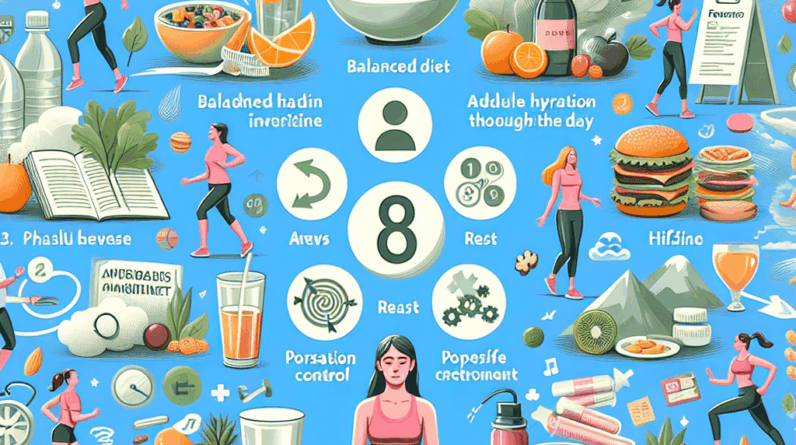
Healthy eating active living program essentials combine balanced food choices, routine movement, measurable goals, and an environment that makes both behaviors easier to repeat. A sound program emphasizes vegetables, fruit, whole grains, varied protein sources, water, aerobic activity, and strength work while allowing for budget, ability, culture, and medical needs. Progress should be judged through repeatable actions, energy, mobility, and other personally relevant measures rather than rapid weight change alone. Programs tend to work better when meals and activity are scheduled, barriers are reviewed regularly, and difficult weeks trigger practical adjustments instead of abandonment.
What Belongs in a Healthy Eating and Active Living Program?
A useful program connects food, movement, recovery, and the conditions in which choices are made. Treating nutrition and activity as separate projects creates avoidable friction: a demanding exercise schedule can fail when meals do not provide enough energy, while a carefully planned menu may have limited practical value if most of the day remains sedentary. The program should therefore define repeatable behaviors in both areas and show how they fit into an ordinary week.
The nutrition component needs more than a list of approved foods. It should establish a flexible meal pattern built around vegetables and fruit, grain foods with an emphasis on whole-grain options, varied protein sources, and dairy or suitable fortified alternatives when appropriate. Water can be the routine beverage without making every sweetened drink or dessert forbidden. Restrictive rules often shift attention from the overall pattern to isolated decisions, which can make social meals, cultural foods, and busy days feel like failures.
The activity component should cover aerobic movement, muscle strengthening, mobility, and reduced sitting where feasible. Walking, cycling, swimming, dancing, active transportation, resistance bands, free weights, and body-weight exercises can all have a place. The correct mix depends on current ability, health status, access, and preference. Someone returning after a long inactive period needs a different starting point from a regular runner, even if both eventually work toward the same public-health activity guidance.
Support systems are another core element. Food availability, safe places to move, work shifts, caregiving, transportation, disability access, and cost all affect whether a plan can be followed. Telling a shift worker to cook nightly or asking someone with joint pain to begin running ignores the operational barrier. A better design might use batch-cooked staples, frozen vegetables, short walks during breaks, chair-based movement, or professional guidance for an appropriate adaptation.
A compact program checklist should confirm that the following pieces are present:
- Defined behaviors: specific meal and movement actions rather than broad intentions.
- A realistic schedule: times and locations that fit actual obligations.
- Accessible options: affordable foods and suitable forms of activity.
- A monitoring method: a simple record of actions, barriers, and adjustments.
- Safety boundaries: modifications or clinical input when symptoms, medications, pregnancy, disability, or chronic conditions affect participation.
The common mistake is designing for an ideal week. The more useful test is whether the plan still offers a reasonable meal and a manageable form of movement when time, money, energy, or weather is unfavorable.
How Do You Build a Workable Eating Pattern?
A workable eating pattern begins with meals people can assemble consistently, not a perfect menu that demands unusual ingredients or constant tracking. A practical plate might pair vegetables with a protein food and a grain or starchy vegetable: lentil soup with whole-grain toast and fruit, chicken with brown rice and frozen mixed vegetables, or tofu with noodles and sautéed greens. The exact foods can change with culture, appetite, allergies, availability, and budget.
Meal structure matters because it influences convenience and satisfaction. Protein foods such as beans, eggs, fish, poultry, tofu, yogurt, nuts, or seeds can make a meal more substantial. Fiber-containing foods—including vegetables, fruit, legumes, and whole grains—add bulk and variety. Dietary fats from foods such as nuts, seeds, avocado, fish, and plant oils can also contribute flavor and energy. No single nutrient ratio suits everyone, and a general wellness program should not present a standard menu as treatment for a medical condition.
Whole foods and minimally processed staples are useful anchors, but processing is not a reliable pass-or-fail test. Frozen vegetables, canned beans, plain yogurt, whole-grain bread, and canned fish are processed yet can make balanced meals more affordable and convenient. By contrast, products marketed as natural, high-protein, or low-fat may still be costly, poorly matched to a person’s needs, or easy to consume without much satisfaction. Ingredient lists, serving context, sodium, added sugars, and overall dietary pattern provide more useful context than front-label claims alone.
Preparation should target the point where the week usually breaks down. If lunch is routinely bought under time pressure, packing leftovers or keeping tuna, whole-grain crackers, fruit, and shelf-stable alternatives at work may be more effective than redesigning dinner. If produce spoils, buy a smaller amount fresh and rely more heavily on frozen or canned choices. If evenings bring intense hunger, examine whether breakfast and lunch are adequate before imposing tighter evening restrictions.
Programs also need room for preference and shared meals. A rigid template can conflict with family dishes or religious and cultural eating practices, whereas a component approach allows familiar foods to remain central. For example, rice does not need to be removed; its portion and accompaniments can be adjusted by adding beans, vegetables, fish, poultry, or another protein source.
Signs that the pattern is workable include manageable shopping, acceptable food waste, meals that are satisfying, and enough flexibility for weekends or travel. Repeated skipped meals, persistent preoccupation with food, frequent rebound eating, or rules that isolate someone socially signal that the design needs revision. Anyone with an eating disorder history, significant food restrictions, gastrointestinal disease, diabetes, kidney disease, or other nutrition-sensitive condition should seek individualized advice from an appropriately qualified clinician or registered dietitian.
How Do You Turn Physical Activity Into a Routine?
Physical activity becomes routine when its type, duration, place, and fallback option are decided before the week becomes busy. A vague goal to exercise more leaves repeated decisions unresolved. A clearer arrangement might specify a brisk walk after lunch on three weekdays, resistance exercises at home on two evenings, and a longer recreational activity on the weekend, with a shorter indoor option for bad weather.
Aerobic and strengthening activities serve different functions, so relying entirely on one leaves a gap. Brisk walking, cycling, dancing, or swimming raises breathing and heart rate, while resistance work challenges major muscle groups. Mobility exercises can make common movements more comfortable, but stretching alone does not replace aerobic or strength work. Public-health recommendations offer useful destinations; they should not be treated as a mandatory first-week workload for an inactive beginner.
Progression works best when only one demand changes at a time. A person who comfortably walks for 15 minutes might add several minutes, another day, or a modest increase in pace rather than changing all three at once. The same principle applies to strength work: first learn a controlled movement, then add repetitions, resistance, or another set as it becomes manageable. Rapid increases can produce excessive soreness or aggravate an existing problem, which makes consistency less likely.
Movement can be accumulated around real constraints. A parent without an uninterrupted gym hour might walk while a child attends practice, use brief resistance sessions at home, and choose stairs when practical. An office worker might combine a scheduled workout with standing calls and short walking breaks. These incidental bouts should complement rather than excuse a program with no meaningful challenge, but they reduce long sedentary periods and lower the scheduling barrier.
The best activity is not simply the one that burns the most energy. Running may be convenient for one person but unsuitable for another because of pain, balance, fitness, or preference. Pool exercise may reduce impact but requires facility access. Home workouts are inexpensive and private, yet some people benefit from instruction or social accountability. The program should compare options by safety, enjoyment, cost, travel time, and likelihood of repetition.
Good Health Solution is Easier Than Most People Think! Take a Look for Yourself!
Normal effort can include faster breathing, warmth, and temporary muscle fatigue. Chest discomfort, fainting, severe shortness of breath, sudden weakness, or sharp and worsening pain are not targets to push through and may require prompt medical attention. People with significant health conditions, recent surgery, pregnancy-related concerns, or prolonged inactivity may need individualized advice before making demanding changes. A successful schedule leaves ordinary fatigue manageable and allows the next planned session to remain realistic.
How Should the Program Measure and Sustain Progress?
Program measurement should focus first on behaviors that participants can act on. Body weight can be relevant for some people, but it is influenced by factors beyond a single meal or workout and does not reveal whether someone is eating a varied diet, gaining strength, moving more comfortably, or building a reliable schedule. Using it as the only score can hide meaningful progress and encourage unnecessarily aggressive changes.
A simple weekly record can track planned activity sessions completed, strength sessions performed, meals assembled at home, vegetables or fruit included, water carried, sleep opportunities protected, and barriers encountered. Not every item needs daily counting. Choose two or three behaviors that address the current weak point, record them briefly, and review the pattern at the end of the week. Tracking should reduce uncertainty, not become a burdensome test of compliance.
Goals need an action, context, and review date. “Eat better” is difficult to evaluate, while “add a vegetable to weekday lunches for the next two weeks” creates a visible test. “Get fit” can become “walk for 20 minutes after work on Monday, Wednesday, and Friday, using an indoor route if it rains.” After the review period, keep the action if it is useful, scale it if it is too demanding, or replace it if the barrier is structural.
| What to Review | Sign the Approach Is Working | Reason to Adjust |
|---|---|---|
| Meal pattern | Meals are satisfying and ingredients are used | Frequent skipped meals, waste, or rebound hunger |
| Activity schedule | Sessions fit the week and recovery is manageable | Repeated cancellations, worsening pain, or heavy fatigue |
| Goal difficulty | Actions require effort but remain repeatable | Targets feel trivial or routinely impossible |
| Access and cost | Foods and activities remain affordable | Special products, fees, or travel block participation |
Setbacks provide diagnostic information. If workouts repeatedly disappear on late workdays, the problem may be timing rather than discipline; a morning or weekend session could be a better fit. If cooking stops at midweek, preparing one versatile base—such as beans, roasted vegetables, or a grain—may solve more than collecting additional recipes. When a strategy fails three weeks in a row, redesign the strategy instead of repeatedly increasing pressure.
Programs should also avoid rewards that contradict the desired behavior or frame food as something that must be earned. Nonfood recognition, shared activities, new cooking skills, or progress toward a practical purchase can acknowledge consistency without moralizing eating. At the group level, participation data should be interpreted alongside accessibility: low attendance may reflect transport, scheduling, language, childcare, or disability barriers rather than lack of interest.
Maintenance means retaining a small core during disrupted periods. A travel week might preserve breakfast structure and walking while strength sessions pause. Illness or injury may require rest and professional guidance rather than compensatory restriction. Sustainable progress is visible when the program can contract, recover, and resume without turning a temporary interruption into a complete restart.
Conclusion
A dependable program is built around actions that survive ordinary constraints. Prioritize a flexible meal structure, accessible aerobic and strength activities, and a short review process that exposes problems with timing, cost, recovery, or food availability. Use familiar foods and movement options before paying for specialized products or ambitious plans.
Start by auditing one typical week. Identify the meal most often missed or improvised, the realistic windows for movement, and the main obstacle to each. Select one change in both areas, define when it will happen, and review the result after a short trial. Keep what fits, modify what repeatedly fails, and seek qualified support when symptoms, medical conditions, disordered eating concerns, pregnancy, injury, or substantial dietary restrictions make general advice insufficient.
Frequently Asked Questions
Does a program need calorie counting?
No. Some people find tracking informative, but many can improve meal quality and consistency through meal structure, portions, and food availability. Tracking may be inappropriate when it increases anxiety or rigid eating.
Can short activity sessions count?
Yes. Short sessions can lower scheduling barriers and contribute to an active week. Their pace and challenge still matter, and gradual progression may be needed as fitness improves.
Are special diet foods or supplements required?
Usually not for a general wellness program. Familiar foods can supply a varied eating pattern. Supplements should address a defined need and may require professional advice because suitability varies.
How often should goals be reviewed?
A brief weekly check can reveal scheduling and access problems, while a more deliberate review every few weeks can guide progression. Review sooner if pain, severe fatigue, or restrictive eating develops.
What should beginners prioritize first?
Choose one dependable meal action and one manageable movement appointment. Establishing repeatability before adding complexity makes it easier to identify which barrier needs attention.
Further Reading
Authoritative Sources
- USDA MyPlate
myplate.govProvides practical food-group information and meal-planning resources for building a varied eating pattern
- Physical Activity Guidelines for Americans
health.govExplains federal physical activity guidance, including aerobic and muscle-strengthening activity
- Dietary Guidelines for Americans
dietaryguidelines.govOffers federal guidance on dietary patterns, food choices, and nutrition across life stages
- CDC Physical Activity
cdc.govProvides accessible information about activity types, intensity, and ways to incorporate movement into daily life
 Good Health Solution is Easier Than Most People Think! Take a Look for Yourself!