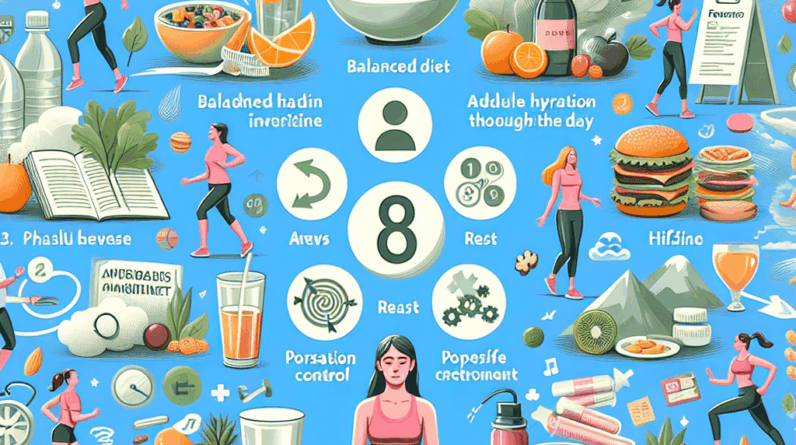
Healthy lifestyle components work together through nutritious food, regular movement, restorative sleep, stress regulation, supportive relationships, and avoidance of harmful substances. Food supplies energy and nutrients, activity maintains physical capacity, and sleep supports recovery, attention, and appetite regulation. Stress-management skills and social connection make those behaviors easier to sustain, while tobacco avoidance and limited alcohol exposure reduce preventable risk. A practical approach is to improve the weakest component without demanding perfection elsewhere—for example, establishing a consistent wake time before redesigning an entire routine.
How Do Lifestyle Components Work Together?
A healthy lifestyle is a connected system rather than a collection of unrelated tasks. Eating patterns affect energy and appetite, movement influences physical capacity and sleep pressure, sleep changes concentration and food choices, and chronic stress can disrupt all three. Social circumstances, work schedules, finances, illness, caregiving duties, and access to safe spaces determine what is realistic. Evaluating the components together produces better decisions than treating each habit as a separate test of discipline.
The interactions become clear in ordinary situations. A person who sleeps five or six interrupted hours may rely on convenient, highly processed snacks because cooking feels difficult and immediate energy is more appealing. Fatigue can then reduce activity, while long periods of sitting may leave that person less ready for sleep the following night. Telling this person to follow a complicated menu or intense exercise program ignores the bottleneck. A steadier wake time, a simple prepared breakfast, and a short daylight walk may be more workable first moves.
Balance does not mean giving every component equal attention every day. It means protecting the basics while directing effort toward the factor causing the greatest disruption. Someone recovering from an injury may need to emphasize rehabilitation and sleep while temporarily modifying exercise. A shift worker may gain more from controlling light, caffeine timing, and meal availability than from following advice designed for a daytime schedule. A person with limited grocery access may reasonably prioritize frozen vegetables, canned beans, oats, eggs, or other durable staples instead of pursuing an idealized fresh-food menu.
A common mistake is measuring success through isolated outcomes, especially body weight. Weight can be relevant in some health discussions, but it does not reveal sleep quality, strength, cardiovascular capacity, food adequacy, stress burden, or substance exposure. More useful signals include steadier daytime energy, fewer skipped meals, improved ability to complete ordinary physical tasks, more predictable sleep, and a routine that survives busy weeks.
Start by identifying one constraint and one stabilizing habit. If afternoons routinely collapse after a missed lunch, improve lunch availability before buying supplements or adding a demanding workout. If bedtime varies by several hours, anchor the morning schedule before optimizing minor details. The aim is not a flawless routine; it is a system in which the components stop working against one another.
What Does Balanced Nutrition Look Like in Daily Life?
Balanced nutrition supplies enough energy, protein, fiber, fats, vitamins, minerals, and fluids without requiring every meal to be nutritionally perfect. A useful meal pattern usually combines a protein source, plant food, carbohydrate source, and fat according to appetite, preferences, medical needs, and activity. Examples include oatmeal with yogurt, berries, and nuts; rice with beans, vegetables, and avocado; or fish with potatoes and a salad. These combinations provide more sustained nourishment than relying on a single food group.
Food processing exists on a spectrum. Frozen vegetables, canned fish, plain yogurt, whole-grain bread, and canned lentils are processed, yet they can make nutritious eating affordable and practical. Products dominated by refined starches, added sugars, or sodium may be less filling when they displace foods rich in protein, fiber, and micronutrients. The useful distinction is not simply processed versus unprocessed. Consider what a product contributes, what it replaces, how often it appears, and whether the portion fits the rest of the day.
Specific nutrients matter, but a food-pattern approach is usually easier to apply. Beans contribute fiber and plant protein; dairy foods or fortified alternatives may provide protein and calcium; nuts and seeds supply unsaturated fats and minerals; fruits and vegetables add varied fibers and micronutrients. No single ingredient compensates for an otherwise inadequate pattern. Supplements may be appropriate for a diagnosed deficiency, pregnancy, restricted diet, or another defined need, but they should not be assumed to reproduce the full role of food. A clinician or registered dietitian can help when medical conditions, medications, allergies, digestive symptoms, or restrictive eating complicate choices.
Budget and convenience change the best option. A home-cooked dinner made from specialty ingredients is not automatically better than a simple supermarket meal that includes rotisserie chicken, frozen vegetables, and microwavable brown rice. Likewise, batch cooking is useful only when storage, time, and tolerance for repeated meals support it. Keeping two dependable breakfasts and two quick dinners available often works better than planning seven elaborate menus.
Signs that a pattern needs adjustment include persistent hunger soon after meals, frequent meal skipping followed by uncomfortable overeating, low food variety, or rules that make shared meals distressing. These signs have many possible causes and are not diagnoses. Try adding protein or fiber to a routinely unsatisfying meal, arranging a portable option for long gaps, and observing the result. Severe fatigue, unexplained weight change, swallowing problems, or persistent digestive symptoms deserve professional assessment rather than self-treatment through increasingly restrictive diets.
How Should Movement, Sleep, and Recovery Be Balanced?
Movement should build or preserve useful capacity without repeatedly exceeding the body’s ability to recover. A complete pattern can include aerobic activity, resistance work, mobility, and ordinary movement such as walking, climbing stairs, gardening, or carrying groceries. Formal workouts are valuable, but they do not erase an otherwise motionless day. Brief walking breaks and active errands can complement structured sessions, especially for people whose jobs involve prolonged sitting.
Beginner and advanced approaches should look different. A previously inactive person may benefit from ten-minute walks, basic sit-to-stand repetitions, or light resistance-band work performed consistently. Copying an experienced athlete’s volume creates needless soreness and raises the chance of quitting. Progress should be gradual: add a little time, resistance, distance, or complexity after the current workload feels manageable. Pain that is sharp, worsening, associated with swelling, or different from ordinary muscle fatigue is a reason to stop and seek appropriate advice.
Sleep is active recovery time, not spare time left after other obligations. Regular timing, sufficient opportunity to sleep, a dark and reasonably quiet room, and separation between stimulating activities and bedtime can improve the conditions for rest. Caffeine late in the day may delay sleep for some people, while alcohol can make a person feel drowsy yet leave sleep fragmented. Individual responses differ, so observe patterns rather than assuming a universal cutoff solves every problem.
Exercise and sleep can reinforce each other, but harder is not always better. Moderate daytime activity may increase sleep pressure, whereas a demanding late session can leave some people alert or uncomfortable. The practical choice depends on schedule and response. If evening exercise is the only feasible option and sleep remains sound, there may be no reason to move it. If bedtime becomes difficult after intense sessions, test a lighter evening workout or place strenuous training earlier when possible.
Recovery can be monitored without specialized devices. Notice whether energy returns between sessions, performance is stable or slowly improving, ordinary soreness resolves, and motivation remains intact. Repeated declines in performance, persistent exhaustion, irritability, or disrupted sleep suggest that workload, nutrition, stress, or recovery time may be mismatched. Wearable data can show trends, but it should not overrule symptoms or become a source of anxiety. Persistent sleep problems, loud snoring with daytime sleepiness, breathing interruptions, or exercise-related chest discomfort require medical evaluation rather than another routine adjustment.
Why Do Stress, Relationships, and Risk Reduction Matter?
Stress regulation and social connection influence whether nutrition, movement, and sleep remain workable under pressure. Stress is not inherently harmful; short-term activation helps people respond to demands. Trouble develops when demands remain high, recovery is scarce, or coping relies mainly on behaviors that create additional risk. Persistent strain can narrow attention toward immediate relief, making regular meals, activity, and bedtime routines harder to maintain.
Useful stress management is specific to the source. A breathing exercise may reduce momentary physical tension, but it will not resolve an unmanageable workload, unsafe relationship, or financial emergency. Problem-focused actions—clarifying responsibilities, asking for practical help, changing a schedule, or contacting an appropriate service—may matter more. Emotion-focused methods such as paced breathing, quiet recreation, time outdoors, or journaling can still help a person regain enough composure to make those decisions.
Relationships provide both emotional and practical resources. A walking partner creates accountability; shared childcare can make exercise or sleep possible; a regular meal with others may improve food consistency. Connection is about quality rather than the number of contacts. Repeated conflict, coercion, or social pressure can undermine health, so spending more time with people is not universally protective. When loneliness, anxiety, low mood, or conflict persist and interfere with daily function, support from a qualified mental health professional may be appropriate.
Good Health Solution is Easier Than Most People Think! Take a Look for Yourself!
Risk reduction deserves equal status with positive habits. Avoiding tobacco and nicotine exposure is more consequential than optimizing minor wellness details. Alcohol decisions should account for health history, medication interactions, pregnancy, driving, sleep, and difficulty controlling intake; drinking should not be started for presumed health benefits. Protective practices also include seat-belt use, sun protection, hearing protection in loud settings, hand hygiene when appropriate, and keeping recommended medical and dental care on schedule.
A frequent failure mode is using a soothing behavior as the only coping tool. Scrolling late into the night, drinking to fall asleep, or eating past comfort may provide short relief while worsening the next day’s energy or stress. The better next step is not self-criticism. Identify the need underneath the behavior—decompression, connection, food, safety, or sleep—and prepare a lower-risk response that can realistically meet it.
Building a Realistic Routine That Can Last
A sustainable routine begins with priorities, environmental support, and feedback rather than an ambitious lifestyle overhaul. Changing many components at once makes it difficult to tell what worked and creates too many points of failure. Choose an action that is meaningful, small enough for a difficult week, and attached to a dependable cue. Placing walking shoes by the door, packing lunch while clearing dinner, or setting a wind-down alarm reduces reliance on memory.
Use the following compact priority check before adding another habit:
- Address safety first: seek appropriate care for alarming symptoms, unsafe substance use, disordered eating concerns, or exercise limitations.
- Stabilize basic needs: protect regular access to food, sleep opportunity, medication routines, and essential support.
- Remove the main obstacle: change the schedule, environment, cost, or complexity that repeatedly causes failure.
- Add one measurable action: define when and where it happens rather than setting a vague intention.
- Review after a realistic trial: keep, simplify, or replace the action based on what actually occurred.
Measurement should inform decisions without dominating them. A weekly note about bedtime consistency, walks completed, vegetables available, or stress level may reveal enough. Signs of success include less negotiation before starting, fewer disruptions when the week becomes busy, and gradual improvement in energy or capability. A plan is failing when it repeatedly requires exceptional motivation, causes pain or excessive hunger, conflicts with necessary responsibilities, or produces guilt without useful information.
Compare two common approaches. An outcome-only goal such as “get healthier” gives no instruction for Tuesday evening. A process goal such as “walk for 15 minutes after lunch on three workdays” identifies a cue and a minimum action. If weather, disability, neighborhood safety, or work rules make that impossible, the correct response is adaptation—not insistence. Indoor walking, seated movement, shorter activity bouts, or a different time may preserve the purpose.
Review the broader pattern monthly rather than reacting to every imperfect day. Ask which component improved, which constraint remains, and whether the routine still fits current health and responsibilities. Add complexity only when the foundation is stable. Personalized guidance is especially useful for pregnancy, chronic disease, recovery from illness or surgery, significant mobility limitations, eating-disorder history, or symptoms that worsen with lifestyle changes.
Frequently Asked Questions
Which healthy lifestyle component should I improve first?
Prioritize safety concerns and basic needs, then choose the component causing the most disruption. Poor sleep opportunity, skipped meals, uncontrolled symptoms, or an unsustainable schedule may need attention before minor optimizations.
Do I need to change every habit at the same time?
No. One well-chosen change is easier to evaluate and maintain. After it becomes reliable, add another action that complements it rather than rebuilding the entire routine.
Can short periods of physical activity still be useful?
Yes. Short walks, stair climbing, mobility breaks, and brief resistance sessions can contribute to an active pattern, particularly when they replace prolonged sitting and are repeated consistently.
Are supplements a necessary part of a healthy lifestyle?
Not routinely. Supplements may be appropriate for specific deficiencies, life stages, restricted diets, or medical needs, but they do not replace varied food, sleep, movement, or appropriate clinical care.
How can I tell whether my routine is sustainable?
A sustainable routine survives ordinary busy periods, does not cause persistent pain or deprivation, and requires less repeated decision-making over time. If it regularly collapses, reduce its complexity or remove the main practical obstacle.
Further Reading
Authoritative Sources
- CDC: About Physical Activity
cdc.govExplains the role of physical activity and offers practical context for building movement into daily life
- USDA MyPlate
myplate.govProvides food-group guidance, meal-planning tools, and examples for varied eating patterns
- National Heart, Lung, and Blood Institute: Sleep
nhlbi.nih.govCovers sleep health, common sleep problems, and signs that may require professional attention
- National Institute of Mental Health: Stress Fact Sheet
nimh.nih.govDescribes stress responses, coping approaches, and circumstances in which additional help may be appropriate
- U.S. Surgeon General: Social Connection
hhs.govOffers public-health information about social connection and its place within well-being
Conclusion
Begin with the part of daily life that is creating the largest health or practical burden, not the habit receiving the most attention online. Secure basic food access, sleep opportunity, safe movement, and needed professional care before refining small details. Then choose one action tied to a reliable cue and test whether it improves energy, function, consistency, or recovery without creating a new problem.
Nutrition, activity, sleep, stress regulation, relationships, and risk reduction should reinforce one another. When they conflict, simplify the routine or address the underlying constraint rather than adding more rules. Review progress through patterns across several weeks, adapt to changes in health or schedule, and seek qualified help when symptoms, medications, injury, restrictive eating, substance use, or mental health concerns make self-directed changes unsafe or ineffective.
 Good Health Solution is Easier Than Most People Think! Take a Look for Yourself!