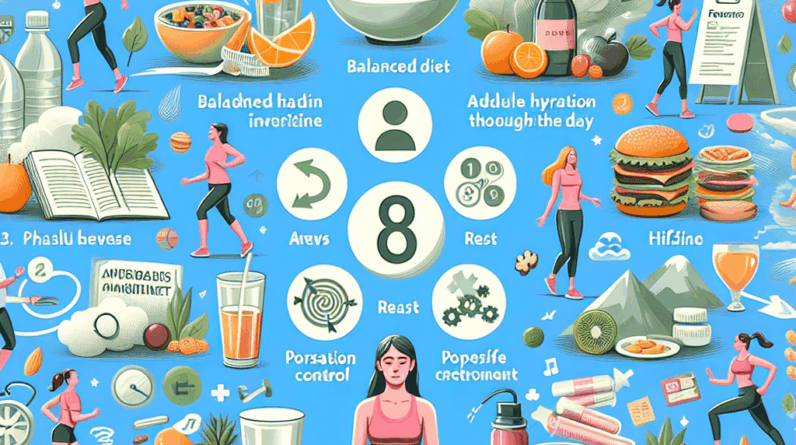
A personal healthy living plan turns realistic goals into repeatable actions by matching nutrition, physical activity, sleep, and stress care to your current schedule and health needs. Begin with one or two measurable behaviors, such as walking for 15 minutes after lunch or adding vegetables to dinner four nights a week. Track whether the action happened rather than expecting immediate changes in weight, mood, or fitness. Review the plan every two weeks, reduce goals that repeatedly create friction, and expand only after the basic routine feels manageable.
How Should You Assess Your Health Baseline?
A useful baseline describes what you currently do, not what you think you ought to do. For seven ordinary days, record approximate sleep and wake times, meals, intentional movement, prolonged sitting, energy patterns, and major sources of schedule pressure. The purpose is not to grade the week. It is to locate dependable opportunities for change and identify constraints that a plan must respect.
Context makes the observations meaningful. Someone who misses breakfast because mornings are rushed has a different problem from someone who is not hungry until noon. The first person might prepare overnight oats or take yogurt and fruit to work; the second may prefer a balanced first meal later in the day. Prescribing the same breakfast goal to both people ignores appetite, work demands, and individual preferences.
Separate behaviors from outcomes when reviewing the baseline. Weight, blood pressure, laboratory values, mood, and exercise capacity may matter, but they are influenced by multiple variables and may change slowly. Actions such as taking a walk, preparing lunch, or keeping a regular bedtime are more directly controllable. If a health outcome needs clinical interpretation, discuss it with an appropriate professional rather than using a self-directed lifestyle plan as a diagnosis or treatment.
Look for patterns that create leverage. An evening bedtime that shifts by several hours may make morning exercise unrealistic. A long commute could rule out cooking every night but leave room for batch preparation on a less crowded day. Recurring knee pain may favor low-impact movement and a medical or physical-therapy assessment instead of a running target. Available money, food access, caregiving, disability, cultural food practices, and safe places to exercise all belong in the baseline.
A common mistake is designing the plan around an unusually good week. Vacation, a quiet work period, or a burst of enthusiasm does not represent normal capacity. Use a typical busy week as the test. Write down two resources you can rely on, two recurring barriers, and one health area that would make daily life noticeably easier. That short assessment provides a stronger foundation than a long wish list.
How Do You Choose Realistic Health Goals?
Realistic goals are specific behaviors that can still happen during a moderately difficult week. “Eat better” offers no decision rule, while “include a fruit or vegetable with lunch on four workdays” defines the action, setting, and frequency. A clear goal also makes failure informative: if produce is unavailable near work, the next adjustment concerns shopping or packing rather than willpower.
Prioritize goals by likely daily value and feasibility. Sleep may deserve attention before an ambitious workout schedule when exhaustion is disrupting meals and concentration. Regular meals may come before detailed nutrient tracking for someone whose work shifts lead to long gaps without food. A person who already walks frequently might benefit more from gradual strength work than from chasing an arbitrary step total. The best first target is not necessarily the most impressive one; it is the behavior that addresses a real need without overwhelming the week.
| Health Area | Vague Intention | Realistic Starting Goal | Evidence to Track |
|---|---|---|---|
| Movement | Exercise more | Walk for 15 minutes after lunch three weekdays | Walks completed |
| Food | Eat healthier | Add beans, vegetables, or fruit to one meal four days a week | Meals that included the chosen food |
| Sleep | Sleep better | Begin a wind-down routine at the same time five nights a week | Routine start times |
| Stress care | Relax more | Take a five-minute screen-free pause after work | Pauses completed |
Use a minimum version and a fuller version of the same behavior. A planned 30-minute walk might have a 10-minute minimum for crowded days. A home-cooked dinner could become a quick combination of frozen vegetables, canned beans, and microwavable brown rice when time is limited. The minimum is not a loophole; it preserves continuity while acknowledging that capacity changes.
A compact priority check can prevent overplanning:
- Relevance: Does the behavior address a genuine health or quality-of-life need?
- Control: Can you perform it without relying heavily on another person or an unpredictable event?
- Fit: Is there a credible time, place, and trigger for it?
- Fallback: Is there a smaller version for difficult days?
Avoid changing food, exercise, sleep, and stress routines all at once. Multiple changes make it difficult to identify what is working and increase the preparation burden. Start with one or two compatible actions, practice them for roughly two weeks, and then decide whether to maintain, modify, or expand them. Goals should remain flexible around illness, recovery, and major life disruption.
Build Healthy Actions Into Your Existing Routine
A behavior becomes easier to repeat when it has a reliable cue and requires little setup at the moment of action. “Walk after putting my lunch container away” is more operational than “walk sometime this afternoon.” The existing event serves as a prompt, while shoes kept near the desk remove a small but recurring obstacle. These details matter because healthy choices compete with fatigue, interruptions, and convenient alternatives.
Shape the environment around the selected goal rather than trying to redesign the whole household. For a balanced packed lunch, place containers where they are visible, keep practical foods available, and decide on a basic combination: a protein source, a high-fiber carbohydrate, produce, and something that adds flavor. That might be chickpeas, whole-grain pita, chopped vegetables, and hummus. It could also be leftover chicken, brown rice, frozen vegetables, and salsa. Whole and minimally processed foods are useful foundations, but canned beans, frozen produce, plain yogurt, and other convenient items can make a routine more affordable and durable.
Convenience deserves deliberate planning. A person who reaches home late is unlikely to prepare a complicated recipe, even if it looked reasonable on Sunday. A backup meal assembled in ten minutes is more useful than an ideal menu that repeatedly leads to takeout or skipped meals. Dietary requirements, allergies, digestive symptoms, medical conditions, and eating-disorder recovery can change which foods and planning methods are appropriate; restrictive plans should not be assumed to be healthier.
Movement follows the same principle. Beginners may do better with short, comfortable sessions that leave them able to return, while an experienced exerciser may need planned progression or recovery. Pain that changes movement, chest discomfort, faintness, or unusual shortness of breath should not be treated as a motivation problem. Stop the activity and seek appropriate medical guidance, urgently when symptoms may indicate an emergency.
Connect each action to a defined place in the day:
- Choose the cue, such as finishing breakfast or closing the work laptop.
- Prepare the needed food, clothing, medication reminder, or equipment beforehand.
- Define a minimum version that takes only a few minutes.
- Decide how to resume after a missed day without doubling the next session.
The common failure mode is adding a new behavior without removing any demand. If meal preparation uses part of Sunday afternoon, something else may need to become simpler. If an earlier bedtime is the target, late-night chores or entertainment need a stopping point. A realistic plan manages tradeoffs explicitly instead of pretending that time and energy are unlimited.
Good Health Solution is Easier Than Most People Think! Take a Look for Yourself!
When Should You Track, Adjust, or Replace a Goal?
Tracking should answer whether the plan is workable, not create another demanding project. A calendar mark, brief note, or weekly count is usually enough for a behavior goal. Review the record at a set interval, such as every two weeks, rather than judging the plan after each imperfect day. Short-term fluctuations in weight, energy, sleep, or mood can reflect many influences and should not be treated as definitive proof that a routine succeeds or fails.
Signs of a workable plan include completing the action on many intended days, needing less preparation over time, recovering promptly after interruptions, and noticing that the behavior fits without crowding out sleep, meals, relationships, or necessary care. Progress may also appear as practical capacity: walking feels more comfortable, vegetables are routinely available, or the bedtime sequence begins with fewer decisions. These observations are more useful for adjustment than perfection-based streaks.
Repeated friction provides a reason to modify the design. If a planned morning workout is missed because a child wakes early, moving the session to lunch may solve the actual conflict. If a 30-minute session is consistently abandoned but 15 minutes happens reliably, the smaller duration may be the correct current dose. If boredom is the problem, changing the route or activity can preserve the goal while altering the format. A missed target is data when it reveals a pattern.
Distinguish a difficult goal from an unsuitable one. Mild effort and gradual adaptation are expected when building a routine. Persistent pain, extreme fatigue, escalating food restriction, anxiety around tracking, worsening sleep, or interference with medical care are signals to stop and reassess. A clinician, registered dietitian, mental health professional, or qualified exercise professional may be appropriate depending on the concern. Lifestyle tracking should never replace prescribed monitoring or professional treatment.
When a behavior is stable, increase only one dimension at a time: duration, frequency, difficulty, or variety. For example, extend two walks by five minutes rather than simultaneously adding hills, extra days, and a faster pace. If adherence drops sharply after the change, return to the previous version and progress more gradually. Replace a goal when it no longer serves the underlying need, not merely because it feels ordinary. Ordinary, repeatable behaviors are often the point of a personal healthy living plan.
Conclusion
Choose a small behavior that addresses a genuine need and can survive an ordinary busy week. Give it a specific cue, prepare the environment, and define a reduced version for days when time or energy is limited. Measure completion before judging slower outcomes, then review the pattern after about two weeks.
If the action repeatedly fails, change its timing, size, or setup before blaming motivation. Expand only one element once the routine is dependable, and retain simple behaviors that continue to serve their purpose. Health conditions, troubling symptoms, pain, or a history that makes food and exercise tracking risky call for personalized professional input. The next practical step is to observe one typical week and select no more than two actions grounded in what that week reveals.
Frequently Asked Questions
How many health goals should I start with?
Begin with one or two behaviors that fit together, such as preparing lunch and taking a short walk afterward. Adding several unrelated goals at once increases setup demands and makes it harder to tell which change is useful.
How often should I review my plan?
A review about every two weeks is frequent enough to identify recurring barriers without reacting to every missed day. Review sooner if the plan causes pain, distress, excessive restriction, or conflict with medical advice.
Should weight loss be the main measure of progress?
Not necessarily. Track behaviors within your control, such as walks completed, regular meals, or bedtime consistency. Weight can fluctuate and may be an unsuitable focus for some people, particularly when there is a history of disordered eating.
What should I do after missing several days?
Resume with the minimum version of the behavior and identify the practical barrier. Avoid compensating with extreme exercise, food restriction, or an overloaded schedule; those reactions can make another lapse more likely.
When should I seek professional help with a healthy living plan?
Seek individualized guidance when pregnancy, chronic illness, medication effects, significant pain, disability, eating-disorder history, or concerning symptoms affect the plan. Urgent or severe symptoms require prompt medical evaluation rather than lifestyle experimentation.
Further Reading
Authoritative Sources
- About Physical Activity
cdc.govThe CDC explains the role of physical activity and provides context for building movement into a broader health routine
- MyPlate
myplate.govUSDA food-group resources offer practical ideas for assembling varied meals without relying on a highly restrictive menu
- Sleep Deprivation and Deficiency
nhlbi.nih.govThe National Heart, Lung, and Blood Institute provides background on sleep deficiency, health effects, and sleep-related care
- Keep Active and Eat Healthy to Improve Well-being and Feel Great
niddk.nih.govNIDDK presents practical considerations for everyday activity and food choices while acknowledging barriers to change
 Good Health Solution is Easier Than Most People Think! Take a Look for Yourself!