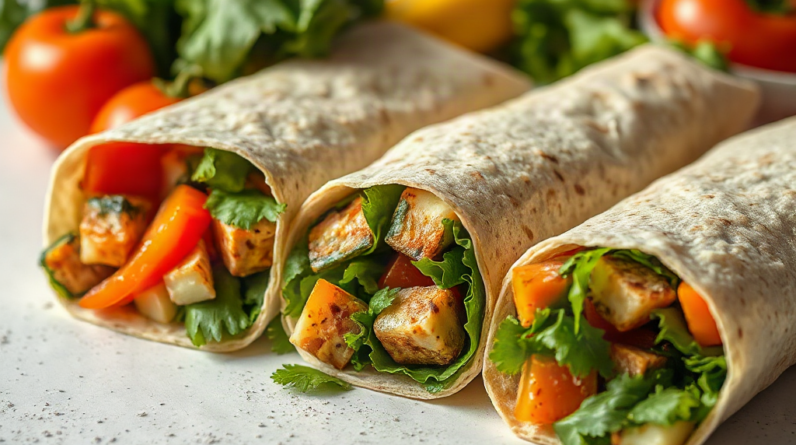
Healthy wraps with high-volume vegetable fillings work best when crisp, cooked, and creamy ingredients are layered in controlled amounts rather than piled together indiscriminately. Use two or three cups of vegetables per large wrap, remove excess moisture from watery produce, and add beans, eggs, fish, poultry, tofu, or another protein for staying power. A thin spread of hummus, yogurt sauce, mashed avocado, or bean purée anchors loose pieces and protects the tortilla from wet ingredients. Choose flexible whole-grain tortillas, keep fillings away from the edges, and serve immediately unless every component has been cooled and dried for meal prep.
What Makes a Vegetable Wrap Filling and Satisfying?
A satisfying vegetable wrap needs more than a large quantity of raw greens. Vegetables provide bulk, texture, water, fiber, and a range of micronutrients, but a wrap made only from lettuce, cucumber, and tomato may leave someone hungry soon afterward. Pairing the vegetables with a meaningful protein source and a modest amount of fat creates a more complete meal while preserving the high-volume character.
Texture determines whether that volume feels substantial or merely bulky. Shredded cabbage, carrots, radishes, peppers, broccoli slaw, and snap peas retain crunch after dressing. Roasted mushrooms, cauliflower, zucchini, eggplant, and onions contribute savory depth and make the filling feel more meal-like. A smaller creamy element—such as hummus, mashed beans, avocado, labneh, or thick yogurt sauce—connects the contrasting textures and helps prevent chopped ingredients from falling out.
Volume also has physical limits. A standard small tortilla cannot reliably contain several cups of vegetables, especially when the pieces are large or rigid. A flexible burrito-size tortilla offers more working space, but an oversized wrap can still split if the vegetables form a tall mound. Shredding or thinly slicing firm produce lets it settle into a compact layer without removing much volume. Chopping long roasted strips into bite-size pieces also produces a cleaner bite.
For a practical lunch, match the vegetables with roughly one palm-size portion of protein rather than treating protein as a garnish. Useful options include chickpeas, lentils, black beans, baked tofu, tempeh, eggs, tuna, chicken, or leftover fish. Cheese adds flavor and some protein, although using it as the only substantial filling may shift the wrap away from its vegetable-focused purpose.
Seasoning matters because a large amount of produce can dilute a weak sauce. Salt, acidity, herbs, and spices should be distributed through the filling instead of concentrated in one wet streak. Toss cabbage with lime and cumin, season roasted vegetables before cooling them, or mix dill and lemon into a thick yogurt spread. The common failure is adding more sauce to correct blandness. Better seasoning creates flavor without flooding the tortilla.
How Do You Prevent High-Volume Wraps From Becoming Soggy?
Moisture control is the main structural requirement for a vegetable-heavy wrap. Tomatoes, cucumbers, zucchini, mushrooms, thawed vegetables, pickles, and dressed greens can release liquid after assembly. That liquid migrates into the tortilla, weakening it and making the filling slide. More vegetables create more potential moisture, so preparation matters as much as ingredient choice.
Start by drying washed produce thoroughly. A salad spinner works well for leafy greens and shredded cabbage, while a clean towel can remove surface water from peppers, herbs, and cucumbers. Scoop the wet seed cavity from tomatoes or cucumbers when preparing wraps several hours ahead. Salted vegetables should be drained because salt draws out water over time.
Cooked vegetables need a different approach. Roasting generally creates a drier filling than steaming, but zucchini, mushrooms, and eggplant can still hold considerable moisture. Spread them in a single layer, avoid crowding the pan, and let them cool uncovered before assembly. Enclosing hot vegetables creates steam inside the wrap, softening both the tortilla and any crisp ingredients. A wrap that feels firm when packed but turns wet later often contains vegetables that were still warm.
Ingredient order provides another layer of protection. Spread hummus, mashed avocado, thick yogurt, or bean purée across the center of the tortilla, leaving a border. Place sturdy greens or shredded cabbage over the spread, followed by protein and drier vegetables. Keep juicy tomatoes, pickles, salsa, and vinaigrette closer to the center rather than against the tortilla. For longer storage, pack wet components separately and add them just before eating.
Not every sauce is equally suitable. Thick spreads remain where they are placed, while thin dressings run toward the fold and escape. If a favorite dressing is loose, use less of it or toss it with absorbent ingredients such as chickpeas and cabbage rather than pouring it directly onto the tortilla. Adding dry grains can absorb moisture, but a large grain portion displaces vegetables and changes the meal’s balance.
Signs of good moisture control include a dry outer surface, distinct crisp textures, and a seam that stays closed. Damp spots, pooled liquid on the plate, or a tortilla that tears during rolling indicate that the filling needs further draining, cooling, or portion control.
Six Vegetable Filling Combinations That Work
Reliable combinations balance crisp and tender vegetables with protein, seasoning, and a spread that is thick enough to support the structure. The following pairings are templates rather than rigid recipes; portions should fit the tortilla and individual energy needs.
| Combination | High-volume vegetables | Protein and binder | Best preparation detail |
|---|---|---|---|
| Crunchy chickpea | Cabbage, carrot, pepper, cucumber | Mashed chickpeas and hummus | Dry the cucumber and season with lemon and cumin |
| Roasted Mediterranean | Eggplant, zucchini, pepper, spinach | White beans and thick yogurt | Cool the roasted vegetables completely |
| Black bean slaw | Cabbage, radish, corn, lettuce | Black beans and avocado | Drain the beans and corn before assembly |
| Tofu peanut crunch | Broccoli slaw, snap peas, carrot | Baked tofu and thick peanut sauce | Use sauce sparingly and cut tofu into narrow strips |
| Egg and garden vegetable | Spinach, pepper, mushrooms, tomato | Sliced egg and yogurt-herb spread | Cook mushrooms dry and remove tomato seeds |
| Tuna and chopped greens | Romaine, celery, cabbage, pepper | Tuna mixed with yogurt or mayonnaise | Keep the tuna mixture thick rather than loose |
The crunchy chickpea combination is particularly forgiving for packed lunches. Lightly mash some chickpeas into the hummus so whole legumes do not roll out, then add finely shredded cabbage and carrot for durable crunch. Cucumber contributes freshness but should be patted dry. If the wrap will sit overnight, carry lemon juice separately or use only enough to brighten the chickpea mixture.
Roasted Mediterranean vegetables offer deeper flavor, but they demand the most moisture management. Roast eggplant, zucchini, and peppers until browned rather than merely softened. White beans make the filling more substantial, while a thick yogurt spread adds tang. Fresh spinach can form a barrier between the tortilla and the cooked mixture. This option is better assembled after the vegetables cool than rolled directly from a warm sheet pan.
Good Health Solution is Easier Than Most People Think! Take a Look for Yourself!
Black bean slaw and tofu peanut crunch are useful when strong seasoning is needed. Lime, cumin, cilantro, and a small amount of avocado suit the bean filling. For tofu, baked or air-cooked strips hold their shape better than soft cubes, and broccoli slaw stays crisp under a thick peanut-lime sauce. People with peanut allergies can use another suitable seed or nut spread, accounting for their own dietary restrictions.
Egg or tuna combinations suit readers who prefer familiar lunch ingredients. Their main risk is overloading the wrap with a soft, wet protein mixture. Keep the protein component thick, then let lettuce, celery, cabbage, peppers, or properly cooked mushrooms supply most of the volume. Dietary needs, allergies, sodium preferences, and food-safety requirements should guide substitutions; a vegetable-rich wrap is a meal format, not a treatment for any health condition.
How Should You Build and Pack Vegetable Wraps?
A consistent assembly order makes a high-volume wrap easier to close and less likely to leak. First, choose a fresh, pliable tortilla large enough for the intended portion. Whole-grain tortillas may offer more fiber than refined versions, but labels and flexibility vary. A product that cracks when folded is a poor choice regardless of its nutrition claims. Brief warming can make many tortillas easier to roll.
Place the tortilla on a flat surface and add a thin layer of spread across the central area. Arrange sturdy leaves or shredded vegetables next, followed by protein and the remaining produce. Keep the filling in a compact horizontal band rather than spreading it from edge to edge. Fold the sides inward, pull the lower edge over the filling, compress gently, and continue rolling. Excess pressure can split the tortilla, while too little pressure leaves air pockets that allow ingredients to shift.
A short pre-rolling check prevents most failures:
- Check temperature: cooked components should be cool before packing.
- Check moisture: no ingredient should drip when lifted.
- Check height: the mound should compress without spilling over the side folds.
- Check texture: include at least one sturdy vegetable that will remain crisp.
- Check the seam: place the finished wrap seam-side down before cutting or packing.
Meal-prep timing depends on the filling. Cabbage, carrots, peppers, roasted cauliflower, baked tofu, and thick bean spreads generally tolerate advance assembly better than tomatoes, dressed lettuce, cucumber, or warm mushrooms. For maximum texture, store prepared components separately and roll the wrap shortly before eating. If convenience matters more, assemble the night before but isolate wet ingredients and refrigerate promptly in a sealed container.
Wrapping the finished roll in parchment or foil helps maintain its shape. Cut it only when ready to eat, because exposed cut surfaces allow moisture to escape and fillings to loosen. Perishable wraps containing eggs, fish, poultry, dairy, tofu, or cooked beans should remain properly chilled rather than sitting in a bag for extended periods. An insulated lunch bag with a cold source is more appropriate when refrigeration is unavailable.
A successful wrap opens cleanly, retains recognizable textures, and can be eaten without liquid collecting at the bottom. If it repeatedly splits, reduce the filling slightly or move to a larger tortilla; double-wrapping adds more tortilla without correcting an overloaded center. If the wrap holds together but tastes flat, season individual components rather than adding another layer of watery dressing.
Frequently Asked Questions
Which vegetables add the most volume without making a wrap soggy?
Shredded cabbage, carrots, peppers, radishes, broccoli slaw, snap peas, romaine, and well-dried spinach provide substantial volume with relatively little free liquid. Watery produce can still be used after draining, seeding, or packing it separately.
How much vegetable filling fits in one wrap?
A flexible burrito-size tortilla can often hold about two to three loosely packed cups of finely cut vegetables plus a moderate protein portion. Capacity varies by tortilla size, ingredient shape, and moisture, so reduce the amount if the side folds cannot overlap.
Can vegetable wraps provide enough protein for lunch?
They can when vegetables are paired with a substantial serving of beans, lentils, tofu, tempeh, eggs, fish, poultry, or another suitable protein. The appropriate amount depends on individual needs and the rest of the meal.
What can replace a tortilla?
Large collard leaves, sturdy lettuce leaves, or thin vegetable flatbreads can hold some fillings, but they differ in capacity and flexibility. For very bulky fillings, a bowl may be more practical than forcing everything into a fragile wrapper.
How far ahead can a vegetable wrap be assembled?
Dry, cooled fillings can often be assembled the night before, while juicy or dressed ingredients are better added shortly before eating. Keep wraps with perishable components refrigerated and use a cold source during transport.
Conclusion
Vegetable volume works when the wrap is engineered around texture, moisture, and structure. Begin with a flexible tortilla, combine crisp produce with properly cooled cooked vegetables, and include a substantial protein component. Use a thick spread as both flavoring and adhesive, then keep tomatoes, dressings, pickles, and other wet ingredients away from the tortilla or pack them separately.
For the next wrap, choose one of the six combinations and prepare every ingredient before assembly. Dry washed produce, drain beans, cool roasted vegetables, and cut rigid pieces thinly enough to compress. If the first roll splits, adjust the filling quantity rather than adding a second tortilla. If it softens during storage, identify the ingredient releasing liquid and change its preparation or packing position. Those small corrections produce a wrap that remains vegetable-forward, satisfying, and practical to eat.
 Good Health Solution is Easier Than Most People Think! Take a Look for Yourself!